
What is a Reduction Gearbox? Working Principle, Types & Applications
In modern industrial machinery, controlling speed and torque is essential for efficiency and performance. One of the most critical mechanical components used to achieve this is a reduction gearbox. From manufacturing plants to heavy-duty processing industries, reduction gear systems play a vital role in optimizing machine output and ensuring smooth operation.
If you’re looking for high-performance speed reduction solutions, explore our complete range of advanced Gear Reduction Systems designed for industrial use.
At Gamma Gears, we specialize in designing high-performance gear systems tailored to industrial requirements. This guide will help you understand what a reduction gearbox is, how it works, its types, and where it is used.
What is a Reduction Gearbox?
A reduction gearbox is a mechanical device designed to reduce the speed of a motor while simultaneously increasing torque. It works by using a set of gears with different sizes to convert high-speed input into lower-speed output.
In simple terms:
- High speed + Low torque (input) → Low speed + High torque (output)
This makes reduction gearboxes essential for applications where heavy loads need to be moved at controlled speeds.
Working Principle of a Reduction Gearbox :
The working principle of a reduction gearbox is based on the concept of gear ratio.
When a smaller gear (pinion) drives a larger gear:
- The output speed decreases
- The torque increases
Key Components:
- Input shaft (connected to motor)
- Output shaft (connected to machine)
- Gear sets (helical, worm, bevel, etc.)
- Housing and lubrication system
How It Works:
- The motor transfers rotational energy to the input shaft.
- The input gear rotates and engages with a larger gear.
- Due to the size difference, rotational speed is reduced.
- Torque is increased and transferred to the output shaft.
This process ensures machines operate efficiently without overloading the motor.
Types of Reduction Gearboxes :
Different industrial applications require different types of reduction gearboxes. Here are the most commonly used ones:
1. Helical Gearbox :
Helical gearboxes use angled teeth for smooth and quiet operation. They are highly efficient and suitable for high-load applications.
Features:
- High efficiency
- Low noise
- Long service life
For applications requiring smooth and efficient power transmission, our precision-engineered Helical Gear Drives offer superior performance and durability.
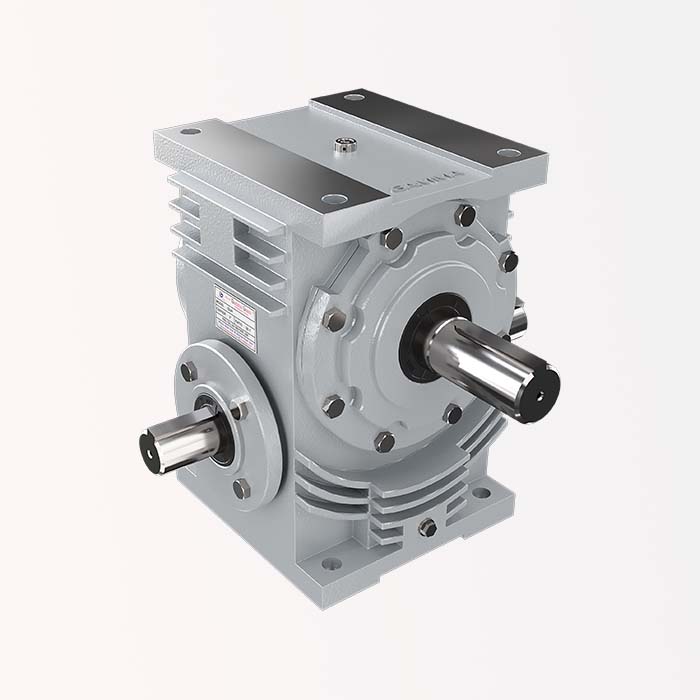
2. Worm Reduction Gearbox :
This type uses a worm (screw) and a worm wheel to achieve high reduction ratios.
Features:
- Compact design
- High torque output
- Self-locking capability
3. Planetary Gearbox :
Planetary gear systems consist of a central sun gear, planet gears, and a ring gear.
Features:
- High torque density
- Compact size
- Excellent load distribution
4. Bevel Gearbox :
Bevel gearboxes are used when the direction of power transmission needs to change (usually 90 degrees).
Features:
- Angular transmission
- High efficiency
- Suitable for heavy-duty applications
5. Spur Gearbox :
Spur gearboxes use straight-cut gears and are commonly used in simple applications.
Features:
- Simple design
- Cost-effective
- Easy maintenance
Advantages of Using Reduction Gearboxes :
Reduction gearboxes provide several operational benefits:
- Increased Torque Output
Enables machines to handle heavy loads efficiently. - Controlled Speed
Ensures precision in industrial operations. - Energy Efficiency
Reduces strain on motors and improves performance. - Extended Equipment Life
Minimizes wear and tear on machinery. - Versatility
Suitable for various industrial applications.
How to Choose the Right Reduction Gearbox :
Selecting the right gearbox is crucial for performance and longevity. Consider the following factors:
1. Load Requirement :
Determine the torque needed for your application.
2. Speed Ratio :
Choose the appropriate gear ratio based on input and output speed.
3. Efficiency :
Higher efficiency reduces energy consumption.
4. Mounting Type :
Foot-mounted, flange-mounted, or shaft-mounted options.
5. Environmental Conditions :
Consider temperature, dust, and moisture levels.
6. Maintenance Requirements :
Choose gearboxes with easy servicing options.
Choosing the right supplier is equally important—read our detailed guide on selecting a reliable Gearbox Manufacturer For Your industry.
Why Choose Gamma Gears?
At Gamma Gears, we provide high-quality, precision-engineered gearboxes designed for durability and performance.
Our Strengths:
- Advanced manufacturing technology
- Wide range of industrial gearboxes
- Custom solutions for different industries
- Strict quality control standards
- Reliable after-sales support
Our gearboxes are trusted by industries across India for their efficiency and reliability.
Still unsure which gearbox fits your application? Connect with our experts for personalized guidance and technical support.
FAQs :
What is a reduction gearbox and how does it work?
A reduction gearbox is a mechanical device that reduces the speed of a motor while increasing torque. It works by using a combination of gears where a smaller gear drives a larger gear, resulting in lower output speed and higher torque, making it ideal for heavy-duty industrial applications.
Why is a reduction gearbox used in industrial applications?
Reduction gearboxes are used to control speed and increase torque in machinery. They help improve efficiency, reduce motor load, and ensure smooth operation in applications like conveyors, crushers, and manufacturing systems.
What are the main types of reduction gearboxes?
The most common types of reduction gearboxes include:
- Helical gearboxes
- Worm gearboxes
- Planetary gearboxes
- Bevel gearboxes
- Spur gearboxes
Each type is designed for specific applications based on load, speed, and efficiency requirements.
What is the difference between a gearbox and a gear reducer?
A gearbox is a general term for a system of gears used to transmit power, while a gear reducer specifically refers to a gearbox designed to reduce speed and increase torque. In industrial usage, both terms are often used interchangeably.
How do I choose the right reduction gearbox for my application?
To choose the right reduction gearbox, consider factors such as required torque, input speed, output speed, load type, mounting style, and environmental conditions. Selecting the correct gearbox ensures better performance and longer service life.
What is the gear ratio in a reduction gearbox?
The gear ratio is the ratio of input speed to output speed. For example, a 10:1 ratio means the output shaft rotates once for every 10 rotations of the input shaft, resulting in reduced speed and increased torque.
Where are reduction gearboxes commonly used?
Reduction gearboxes are widely used in industries such as:
- Manufacturing
- Cement plants
- Power generation
- Mining
- Food processing
- Textile machinery
They are essential wherever controlled speed and high torque are required.
What are the advantages of using a reduction gearbox?
Key advantages include:
- Increased torque output
- Better speed control
- Improved energy efficiency
- Reduced wear and tear
- Enhanced machine lifespan
What maintenance is required for a reduction gearbox?
Regular maintenance includes checking lubrication, inspecting gears for wear, monitoring temperature, and ensuring proper alignment. Proper maintenance helps prevent breakdowns and extends gearbox life.
Where can I find a reliable reduction gearbox manufacturer in India?
If you’re searching for a trusted reduction gearbox manufacturer in India, Gamma Gears offers high-quality, precision-engineered solutions for various industrial applications. With a strong focus on performance and durability, the company provides customized gear systems to meet specific needs. You can also explore their complete range of advanced gear reduction systems for efficient power transmission.