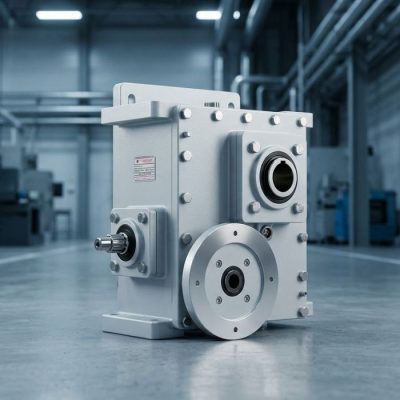
Chemical manufacturing plants operate in some of the harshest industrial environments — corrosive fumes, high humidity, temperature fluctuations, and continuous-duty machinery that cannot afford unplanned downtime. In such conditions, the gearbox is not just a mechanical component; it is the backbone of every rotating equipment in the plant, from reactors and agitators to mixers, conveyors, and dosing systems.
At Gamma Gears, we understand that chemical industry applications demand more than a standard gearbox. They require engineering that accounts for corrosive exposure, load variability, and round-the-clock operational reliability. With 18 years of experience manufacturing industrial gearboxes in Ahmedabad, Gujarat, we supply gear solutions specifically suited to the chemical processing sector.
Nearly every stage of chemical processing depends on controlled rotational motion — mixing raw materials at a precise speed, moving product through conveyors at a fixed rate, or driving agitators that keep a reaction mixture homogeneous. The gearbox sits between the motor and the driven equipment, converting motor speed into the exact torque and RPM the process requires.
In a chemical plant, this conversion has to happen reliably under conditions that would degrade standard mechanical components quickly. A gearbox that performs well in a dry, climate-controlled facility may fail within months in a chemical processing environment if it isn’t built with the right materials, sealing, and load tolerances. This is why chemical plant engineers typically specify gearboxes differently from those used in, say, general manufacturing or packaging lines. Gear reduction principles are well-documented by AGMA (American Gear Manufacturers Association), the industry standards body for gear design and manufacturing.”
Standard industrial gearboxes are not always built to withstand the specific stresses chemical plants place on rotating machinery. Here’s what makes chemical industry applications unique:
Chemical plants often deal with acidic vapors, alkaline residues, and moisture-heavy atmospheres. Gearbox housings and seals need corrosion-resistant coatings and materials to prevent premature wear, rust, and seal failure. Even trace exposure to corrosive vapors over months can degrade unprotected metal surfaces, leading to leaks and reduced gear life.
Many chemical processes run 24/7 — batch reactors, mixing tanks, and conveyor systems rarely stop. Gearboxes in these settings must be engineered for continuous-duty cycles without overheating or losing lubrication efficiency. Thermal management becomes especially important, since sustained operation generates heat that, if not dissipated properly, accelerates lubricant breakdown and bearing wear.
Agitators and mixers handling viscous or high-density chemical compounds create fluctuating torque demands. A gearbox that cannot absorb shock loads will suffer premature gear wear and bearing failure. This is particularly true in batch processes where material viscosity changes significantly during a mixing cycle — from thin liquid to thick paste, for example.
Many chemical processes — dosing, blending, controlled mixing — depend on precise, consistent speed output. Gear ratio accuracy directly affects product quality and batch consistency. Even small deviations in output speed can affect reaction times, mixing uniformity, or dosing accuracy in sensitive formulations.
In certain chemical processes, especially those adjacent to pharmaceutical or specialty chemical production, leak-proof sealing is critical to prevent lubricant contamination of the process stream. Gearbox seal quality directly impacts whether a plant can maintain contamination-free operation.
Continuous-duty rotating equipment in enclosed chemical processing areas can generate vibration that, over time, loosens mountings and stresses connected piping or instrumentation. Gearboxes engineered with tighter tolerances and better-balanced internal components reduce this risk.
We manufacture and supply a range of gearbox types that are commonly deployed across chemical processing applications, engineered with the durability and precision this sector demands.
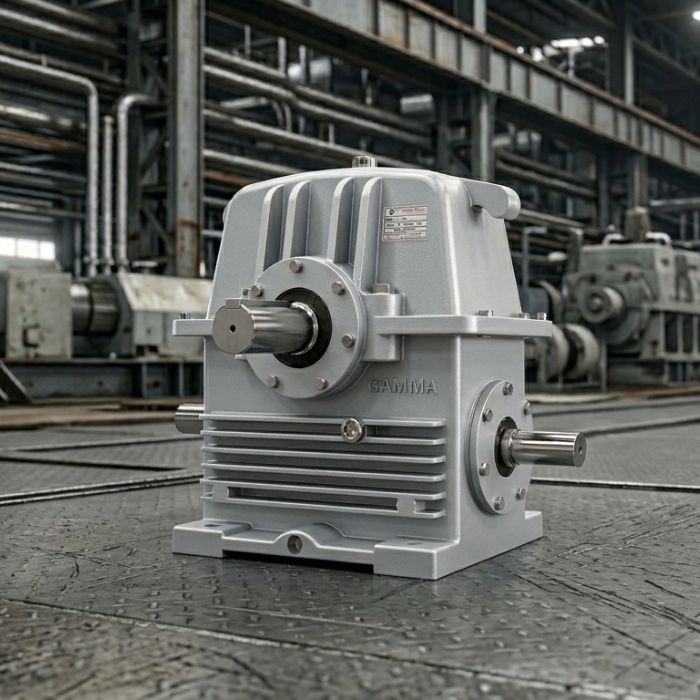
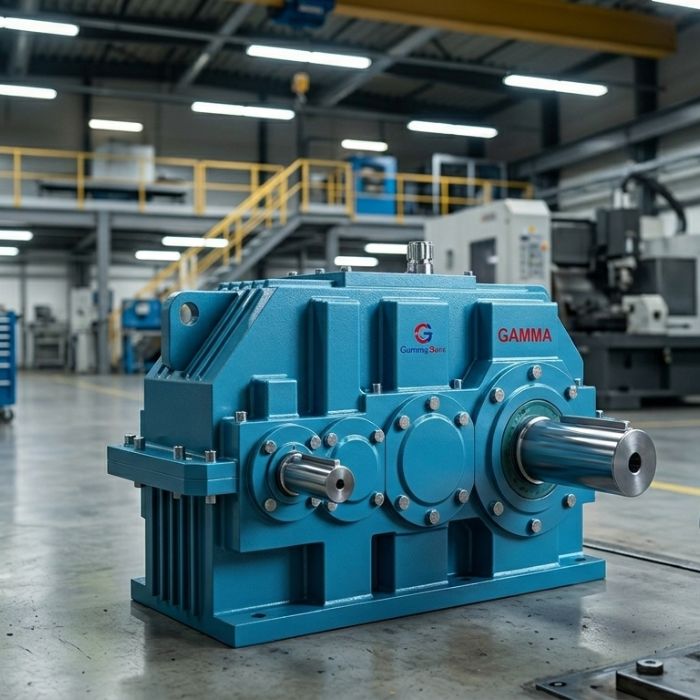
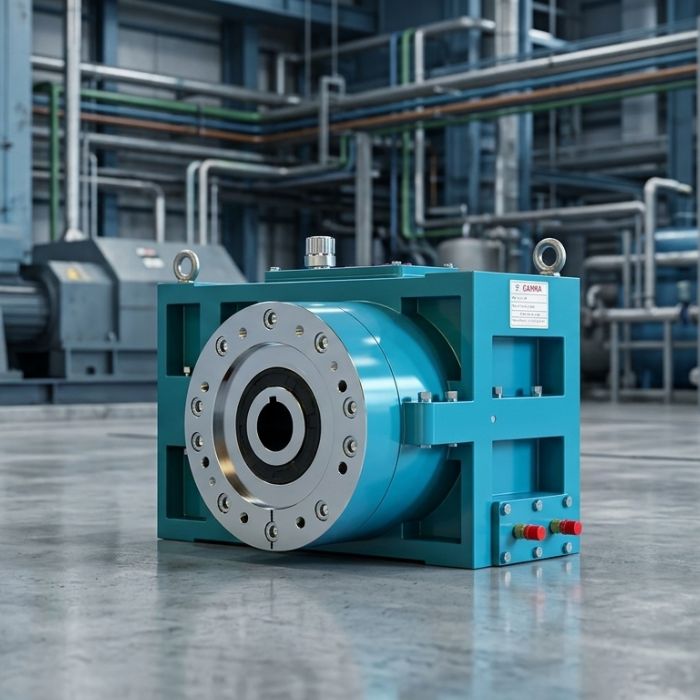
When selecting a gearbox for chemical plant machinery, plant engineers and procurement teams typically evaluate:
Our engineering team works with these parameters as standard practice, ensuring every gearbox supplied for chemical industry use is matched to the actual operating conditions of your plant — not just a generic off-the-shelf specification.
Beyond selecting the right gearbox, ongoing maintenance plays a major role in operational reliability. Chemical plant environments accelerate wear on seals and lubricants faster than standard industrial settings, so maintenance schedules typically need to be more frequent. Common practices include periodic lubricant analysis to check for contamination, seal inspection during scheduled shutdowns, and vibration monitoring on continuous-duty units to catch bearing issues before they cause failure. Gamma Gears’ maintenance services support plants in establishing and following these schedules, reducing the likelihood of unplanned stoppages.
Recognizing early warning signs can help chemical plants avoid costly unplanned shutdowns. Operators and maintenance teams should watch for unusual vibration or noise during operation, which often signals bearing wear or misalignment. Rising operating temperature beyond normal baseline readings can indicate lubrication breakdown or internal component stress. Visible lubricant leakage around seals points to seal degradation, often accelerated by chemical exposure. Inconsistent output speed or torque, especially in dosing and mixing applications, can affect batch quality even before a full failure occurs. Addressing these signs early, through scheduled inspection rather than reactive repair, is generally far less costly than replacing a failed unit mid-process.
With 18 years in gearbox manufacturing, we’ve supplied solutions across multiple heavy-industry sectors, giving us practical insight into how chemical plant conditions affect gearbox performance and longevity.
Every gearbox goes through structured engineering inspection and quality control before dispatch, ensuring dimensional accuracy and consistent performance.
Beyond our standard product range, our engineering services team can design gearboxes to match specific mounting configurations, ratios, and corrosion-resistance requirements for your chemical processing line.
Being based in Gujarat’s industrial belt allows us to offer faster turnaround, easier site visits for engineering consultation, and responsive after-sales support for chemical plants across the region and beyond.
Beyond supply, our maintenance services help extend gearbox operational life through scheduled servicing, reducing the risk of unplanned production stoppages.
For plants running critical continuous processes, we also supply gearbox spare parts, reducing downtime when a component replacement is needed rather than a full unit swap.
A single gearbox failure in a continuous-duty chemical process can halt production for hours — or days, if the replacement isn’t matched correctly the first time. Don’t wait for a breakdown to find out your current gearbox wasn’t built for your plant’s actual operating conditions.
Talk to Gamma Gears’ engineering team today. Share your torque, speed, and environmental requirements, and we’ll recommend — or custom-engineer — a gearbox solution built to run reliably in your chemical process, backed by 18 years of manufacturing experience.
Fast response for Gujarat-based plants. Custom specifications available on request.
Mail : gammagears@gmail.com
Worm reduction gearboxes are commonly preferred for mixer and agitator applications due to their compact size, high reduction ratio, and smooth torque delivery — particularly useful for controlling mixing speed in viscous or dense chemical compounds.
Yes. Gamma Gears offers customized gearbox solutions with corrosion-resistant housing options and sealed bearing arrangements designed for plants operating in acidic or moisture-heavy environments.
Maintenance frequency depends on duty cycle and operating conditions, but continuous-duty chemical plant gearboxes typically benefit from more frequent lubrication checks and inspection schedules compared to intermittent-use applications. Our maintenance services team can help establish a servicing schedule based on your specific operating parameters.
Yes, we supply gearboxes for both new plant installations and as replacement units for existing machinery, including custom-matched specifications for retrofit projects.
Generally, our engineering team will need the required torque and speed output, motor specifications, duty cycle details, mounting constraints, and information about the chemical exposure environment. This helps us recommend or design a gearbox suited to your exact application.
In some cases, retrofitting improved seals or housing coatings is possible, though it depends on the existing unit’s design. Our engineering team can assess your current setup and advise whether an upgrade or full replacement is more practical.
Common indicators include gearboxes running hotter than usual, more frequent lubricant top-ups, unusual noise or vibration during operation, or inconsistent output speed under load. If your process demands have increased since the original gearbox was installed, it’s worth having our team review whether the unit still matches your torque requirements.
Lead time depends on the complexity of the specification and current order volume. Standard configurations are generally quicker to fulfill than fully custom designs. Contact our team with your requirements for an accurate timeline.
Housing materials and sealing options can be selected based on the specific type of chemical exposure your plant deals with. Since acidic and alkaline environments affect materials differently, it’s best to share your exact process chemicals with our engineering team so we can recommend the appropriate corrosion-resistant configuration.
Being based in Ahmedabad, Gujarat, we’re able to offer responsive on-site consultation for plants in the region. For installation guidance or troubleshooting support, reach out to our team to discuss what’s needed for your specific setup.
WhatsApp us