
How Does a Reduction Gearbox Improve Machine Performance?
Every industrial machine faces a fundamental challenge: motors spin fast, but most applications need slow, powerful rotation. This is precisely where a Reduction Gearbox becomes indispensable. By converting high-speed, low-torque motor output into low-speed, high-torque drive power, a Reduction Gearbox enables machines to perform heavy-duty tasks efficiently, safely, and reliably. Whether you run a conveyor system in a textile unit in Ahmedabad or operate a cement plant in Gujarat, the right gearbox is the difference between peak performance and costly breakdowns.
A reduction gearbox improves machine performance by reducing the output shaft speed from the motor while simultaneously increasing the torque (rotational force). This allows machines to handle heavy loads at controlled speeds without overloading the motor. The gear ratio determines the trade-off: a 10:1 ratio means the output shaft spins at one-tenth the speed but delivers ten times the torque. Helical gearboxes, the most efficient type, achieve up to 98% power transmission efficiency.
What Is a Reduction Gearbox?
A reduction gearbox (also called a speed reducer) is a mechanical power transmission device that uses a set of meshing gears to reduce rotational speed and amplify torque from an input shaft (connected to a motor) to an output shaft (connected to the driven machine).
Industry Definition: A reduction gearbox is any enclosed gear mechanism designed to deliver a higher torque at a lower speed than the driving input. It is classified by its gear type: helical, worm, bevel, planetary, or spur.
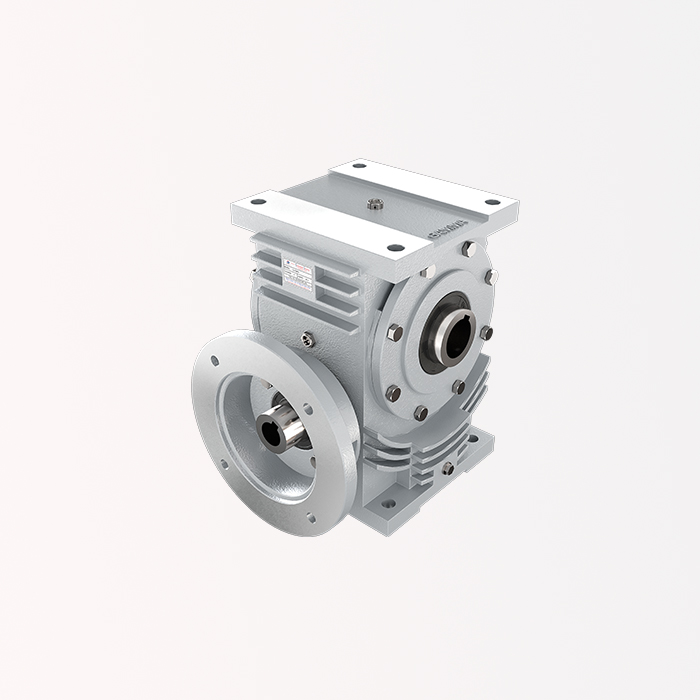
If your application requires high reduction ratios at lower power loads, a Worm Reduction Gearbox may be the more compact and cost-effective solution.
How the Gear Ratio Works :
The gear ratio is the most critical specification of a reduction gearbox. If a motor runs at 1,440 RPM and the application requires 144 RPM, you need a 10:1 gear ratio. The output torque increases proportionally (minus losses), meaning your machine gets the force it needs without requiring an oversized, energy-guzzling motor.
Key Ways a Reduction Gearbox Improves Machine Performance :
1. Torque Multiplication for Heavy-Load Applications :
The primary function of a reduction gearbox is to multiply torque. In industries such as mining, cement, sugar, and steel — all major sectors in Gujarat — machines must move massive loads. Without a gearbox, the motor would need to be enormously oversized, driving up both capital cost and energy consumption.
2. Precise Speed Control :
Many industrial processes require exact output speeds. A reduction gearbox provides that control mechanically, independent of VFDs or electronic regulators. Conveyors, agitators, extruders, and cooling fans all benefit from this inherent speed stability.
3. Motor Protection and Extended Lifespan :
When a gearbox absorbs the torque shock of a heavy load start-up, the motor operates within its designed parameters. This dramatically reduces motor burnout, thermal failure, and bearing wear — cutting maintenance costs for plant operators across Ahmedabad and Gujarat.
4. Higher Overall System Efficiency :
A properly matched reduction gearbox ensures the entire drive system operates at its most efficient point. Studies by the Bureau of Energy Efficiency (BEE), India, indicate that correct power transmission equipment selection can reduce industrial energy bills by 15–30%.
The Helical Gearbox: The Gold Standard in Speed Reduction :
Among all reduction gearbox types, the helical gearbox is the preferred choice for most industrial applications. Unlike spur gears, helical gears have angled teeth that engage progressively, resulting in smoother, quieter operation and significantly higher load-carrying capacity.
For standardised performance and safety benchmarks, refer to IS 13281 by the Bureau of Indian Standards (BIS) — the Indian standard for enclosed gear units used in industrial applications.
Key Helical Gearbox Advantages :
The helical tooth design distributes the load across multiple teeth simultaneously, reducing stress per tooth, lowering heat generation, and extending service intervals. For Gujarati manufacturers dealing with continuous 24×7 production cycles, this translates directly into less downtime and lower maintenance costs.
To understand the full role of speed reducers in modern industry, Read our in-depth guide: Reduction Gearbox: The Backbone of Efficient Industrial Power Transmission.
Industrial Applications in Gujarat and India :
Reduction gearboxes are the backbone of Gujarat’s industrial infrastructure. Here are the sectors where they are mission-critical:
Cement Plants : Kiln drives and ball mill drives require massive torque at very low speeds — exactly what multi-stage helical gearboxes deliver.
Textile Industry : Loom drives, winding machines, and yarn processing equipment rely on precise, low-vibration speed reduction.
Chemical & Pharma : Agitators and reactors need consistent torque output for uniform mixing — helical gearboxes are the standard choice.
Sugar Mills : Cane crushing mills demand extreme torque — heavy-duty planetary and helical gearboxes handle this with proven reliability.
Why Choose Gamma Gears?
Based in Ahmedabad, Gujarat, Gamma Gears is a trusted manufacturer and supplier of high-performance reduction gearboxes and helical gearboxes for industries across India. We combine precision engineering with deep application knowledge to deliver gearbox solutions that outlast and outperform.
Precision Manufacturing :
Custom Gear Ratios :
Gujarat-Based, India-Wide :
Full Product Range :
Quality Assured :
After-Sales Support :
People Also Ask :
A reduction gearbox is used to reduce the rotational speed of a motor while increasing the output torque. It is essential in conveyors, mixers, cranes, mills, compressors, and virtually any machine where the motor speed is too high for the application.
A reduction gearbox is the broader category — it includes any gearbox that reduces speed and increases torque. A helical gearbox is a specific type of reduction gearbox that uses helically cut gear teeth. Helical gearboxes offer superior efficiency (95–98%), quieter operation, and higher load capacity compared to spur or worm types.
A well-designed helical reduction gearbox achieves 95–98% efficiency per stage. Multi-stage units are slightly less efficient overall, but still far superior to alternatives like worm gearboxes, which can drop to 50–70% efficiency at high reduction ratios.
Key selection criteria include: required output speed (RPM), required output torque (Nm or kg·m), input motor speed and power (kW), duty cycle (continuous or intermittent), mounting orientation, ambient temperature, and the nature of the load (steady, shock, or reversing). Contact Gamma Gears in Ahmedabad for a free technical consultation.
Reduction gearboxes are widely used across cement, steel, sugar, textile, mining, chemical, pharmaceutical, food processing, and material handling industries in India — with major demand hubs in Gujarat, Maharashtra, Rajasthan, and Tamil Nadu.
A reduction gearbox is far more than a speed-changing device — it is the engineering foundation that makes industrial machinery reliable, energy-efficient, and long-lasting. From the helical gearbox’s superior efficiency to the protection it provides your motor and driven equipment, every rupee invested in the right gearbox pays back many times over in reduced energy bills, lower maintenance costs, and longer machine life.
For plant engineers, procurement managers, and OEM builders across Ahmedabad and Gujarat, selecting a gearbox from a trusted local manufacturer means faster support, application-specific customization, and the confidence of Indian manufacturing quality.
Explore our complete range of precision-engineered Reduction Gearboxes — available in helical, bevel-helical, worm, and planetary configurations, manufactured at our Ahmedabad facility.
Ready to Upgrade Your Drive System?
Talk to Gamma Gears’ engineering team. We’ll help you select the exact reduction gearbox or helical gearbox for your application — with technical support, competitive pricing, and prompt delivery across India.
FAQs :
What does a reduction gearbox actually do in a machine?
A reduction gearbox reduces the output speed from a motor while increasing the torque delivered to the driven machine. In simple terms, it converts fast, weak rotation into slow, powerful rotation. For example, a motor spinning at 1,440 RPM can be stepped down to 144 RPM while the torque increases tenfold — allowing heavy equipment like conveyors or crushers to operate efficiently.
How does a reduction gearbox improve machine efficiency?
A reduction gearbox improves machine efficiency by matching the motor’s output to the exact speed and torque the application needs, eliminating wasted energy. When the motor operates within its optimal load range, it draws less current, generates less heat, and consumes less electricity. According to India’s Bureau of Energy Efficiency, correct power transmission selection can cut industrial energy costs by 15–30%.
What is the gear ratio in a reduction gearbox and why does it matter?
The gear ratio is the relationship between the input speed and output speed of a reduction gearbox — for example, a 10:1 ratio means the output shaft spins ten times slower than the input. It matters because it directly determines how much torque multiplication the gearbox delivers. Choosing the wrong gear ratio leads to underperformance, overloading, or unnecessary energy consumption.
What is the difference between a reduction gearbox and a helical gearbox?
A reduction gearbox is the broad category of any gearbox that reduces speed and increases torque. A helical gearbox is a specific type of reduction gearbox that uses angled (helical) gear teeth for smoother, quieter, and more efficient power transmission — typically achieving 95–98% efficiency. Most heavy industrial applications in India prefer helical gearboxes for their superior load capacity and long service life.
How long does a reduction gearbox last?
Which industries in India use reduction gearboxes the most?
Reduction gearboxes are used extensively across India’s cement, steel, sugar, textile, chemical, pharmaceutical, food processing, and material handling industries. In Gujarat alone, sectors like ceramics, petrochemicals, and agro-processing rely heavily on helical and bevel gearboxes. Any industry that operates conveyor belts, agitators, kilns, mills, or heavy lifting equipment will require a reduction gearbox in its drive system.
How do I choose the right reduction gearbox for my machine?
To choose the right reduction gearbox, you need to know four key parameters: the required output speed (RPM), the required output torque (Nm), the input motor power (kW), and the nature of the load (steady, shock, or reversing). You should also consider the duty cycle and mounting orientation. Getting any of these wrong leads to premature failure or energy waste — Gamma Gears offers free technical consultation to help you select correctly.
Can a reduction gearbox reduce noise and vibration in industrial machines?
Yes — a helical reduction gearbox significantly reduces noise and vibration compared to spur gears, because the angled teeth engage progressively rather than all at once. This smooth engagement spreads the load across multiple teeth simultaneously, cutting impact noise and mechanical vibration. For factories and processing plants in Ahmedabad, this also means less structural stress on the machine frame and a safer working environment.
What happens if you use the wrong reduction gearbox for your application?
Using the wrong reduction gearbox leads to accelerated wear, overheating, premature bearing failure, and in severe cases, catastrophic gearbox seizure. An undersized unit will be overloaded from day one, while an oversized unit wastes energy and capital. In continuous-production industries like Gujarat’s chemical and textile sectors, an unexpected gearbox failure can mean hours of costly downtime — making correct specification critical.
Why should I buy a reduction gearbox from Gamma Gears in Ahmedabad?
Gamma Gears manufactures precision reduction gearboxes and helical gearboxes at its Ahmedabad facility, serving industries across India. Every unit is CNC-machined to ISO standards and load-tested before dispatch. Buying locally means faster delivery, direct technical support, and customisation options for non-standard gear ratios or mounting configurations. Gamma Gears combines Gujarat-based manufacturing quality with competitive pricing and responsive after-sales service.